Panel-mounted surge protection costs far less than replacing a fried AC control board, a refrigerator or a home office full of equipment. The electrician checks the panel, the grounding and the service entrance before choosing a unit. Call the number on this page to be connected with a local electrician in Glendale.
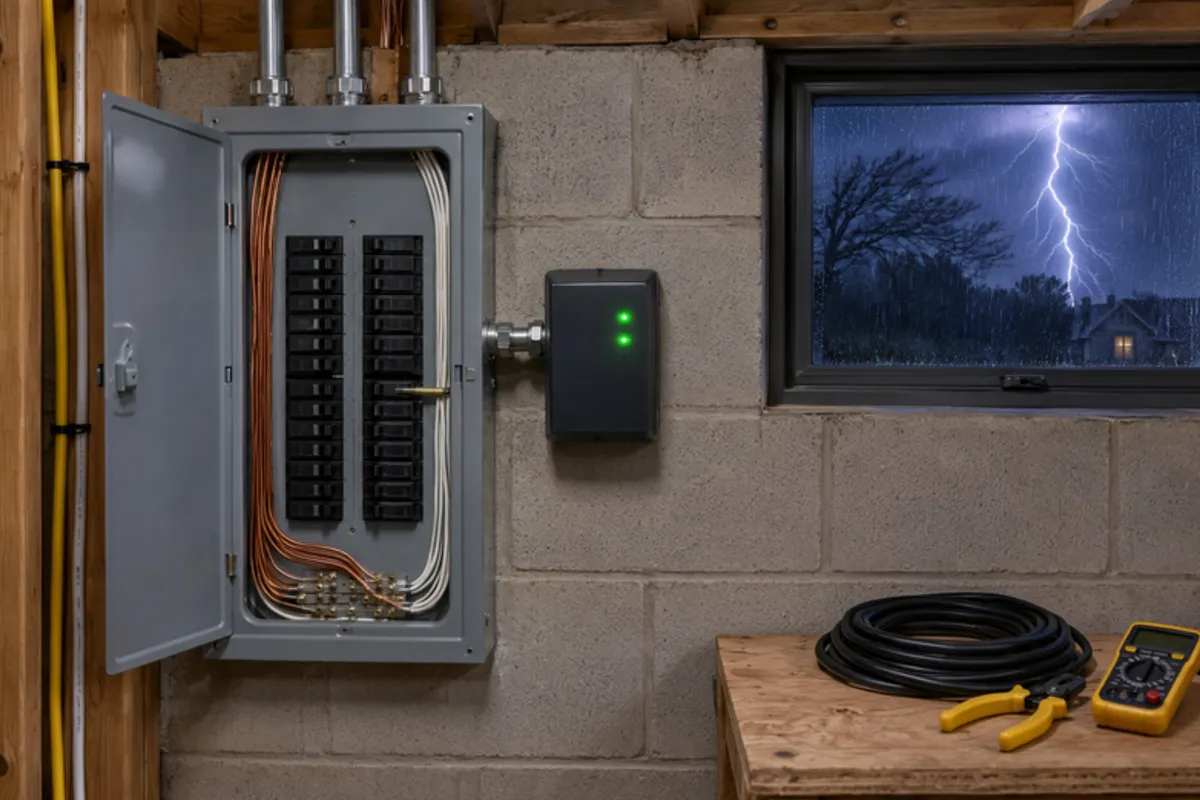
Where surges come from
Lightning is the obvious source, though not the only one. Utility switching, a neighbor's large motor, a downed line returning power and the home's own AC compressor can all create spikes. Most are small and quick, but repeated hits wear down circuit boards over months until one fails at an awkward time.
Why storms hit rural lots hard
Long overhead lines, big open lots and wells with submersible pumps give lightning plenty to work with. A pump or outbuilding on a long run is especially vulnerable. Layered protection at the panel, the pump and sensitive equipment is common on larger properties, and an electrician can map the weak spots.
With a median build year of 1985, many homes here have 1980s panels and aging ground connections, so the electrician checks the grounding before choosing a protector.
Before electrical work starts in Glendale
Power outages and street-side line problems belong to the utility, and in most of the metro that means APS or SRP. The name on the bill settles which one.
Treat any fallen power line as live. APS and SRP both tell people to stay about 100 feet away and call 911. Inside the house, smoke or a hot burning odor from electrical equipment is also a 911 call, made from outside.
Permitted electrical work in Glendale is inspected by Glendale Building Safety. The contractor normally applies and schedules the inspection.
Ask for the contractor's ROC number and look it up on the Arizona Registrar of Contractors search before work begins. Residential electrical is the R-11 class; CR-11 covers both residential and commercial.
Nearby, the same kind of help is available in Peoria, Sun City and Youngtown.
Where the labor goes
The work is mounting the device, running short leads to a breaker, and checking the grounding and bonding. A clean, accessible panel makes the visit quick; a cramped or outdated one adds time. Because the electrician has the panel open anyway, this is a good moment to look at other things.
How you will know it works
Most devices show a status light, either green or a failure color. The electrician should show you where to find it and what each state means. Check it after storms, and note any change. A dark or red light means protection is gone and the device should be replaced.
Downed lines and returning power
After a storm, treat any line on the ground as live, stay about 100 feet away, and call 911, then the utility. Never approach it to check on a surge-related problem. When power returns, a protector at the panel helps with the spike that can follow, but the line itself belongs to the utility.
Around Glendale
Calls come in from across Glendale, including around Loop 101, 51st Avenue, Mohawk Drive.
Catlin Court Historic District in Glendale is a National Register neighborhood subdivided in 1914 whose homes are mostly bungalows from that period, so older wiring is likely in the historic core.
Whole-Home Surge Protection questions in Glendale
Where is a whole-home surge protector installed?
How do I know if my surge protector still works?
Does surge protection fix flickering lights?
What if my outlets are two-prong?
More electrical services in Glendale
Whole-Home Surge Protection nearby
Helpful guides
Sources
Last updated: