New alarms are typically placed in each sleeping area, outside the bedrooms and on each level, and kept clear of kitchens and bathrooms where false alarms occur. An electrician confirms placement. Call the number on this page to be connected with a local electrician in Glendale.
False alarms that keep coming
Alarms near kitchens and bathrooms often react to steam or cooking. Dust, insects and aging sensors also trigger them. An electrician can relocate a unit, swap its type or find out whether a loose connection is causing the problem, instead of someone pulling the battery.
Casitas, garages and add-ons
Guest houses, finished garages and additions often have no alarms at all or ones that do not link to the main house. An electrician can add them and tie them into the system so a fire anywhere warns everyone, including people sleeping away from the main house.
Houses built around 1985, like many in Glendale, tend to have battery-only or unlinked alarms that predate interconnected systems.
Utility, permits and safety in Glendale
Most homes in the Phoenix area get power from APS or SRP, and your bill shows which one serves your address. Both post outage and downed-line numbers on their websites.
Treat any fallen power line as live. APS and SRP both tell people to stay about 100 feet away and call 911. Inside the house, smoke or a hot burning odor from electrical equipment is also a 911 call, made from outside.
Electrical permits for Glendale addresses go through Glendale Building Safety. Panel and service upgrades, new circuits and generator hookups usually need one, followed by an inspection.
Ask for the contractor's ROC number and look it up on the Arizona Registrar of Contractors search before work begins. Residential electrical is the R-11 class; CR-11 covers both residential and commercial.
Calls from Glendale are often matched with electricians who also cover Peoria, Sun City and Youngtown.
Battery-only versus hardwired
Battery-only alarms cost less to buy and need no wiring, but need new batteries and do not interconnect in most cases. Hardwired units cost more to install but run on house power and link together. Many owners choose hardwired in sleeping areas, because those are the places where early warning matters most and where a dead battery goes unnoticed overnight.
What the visit involves
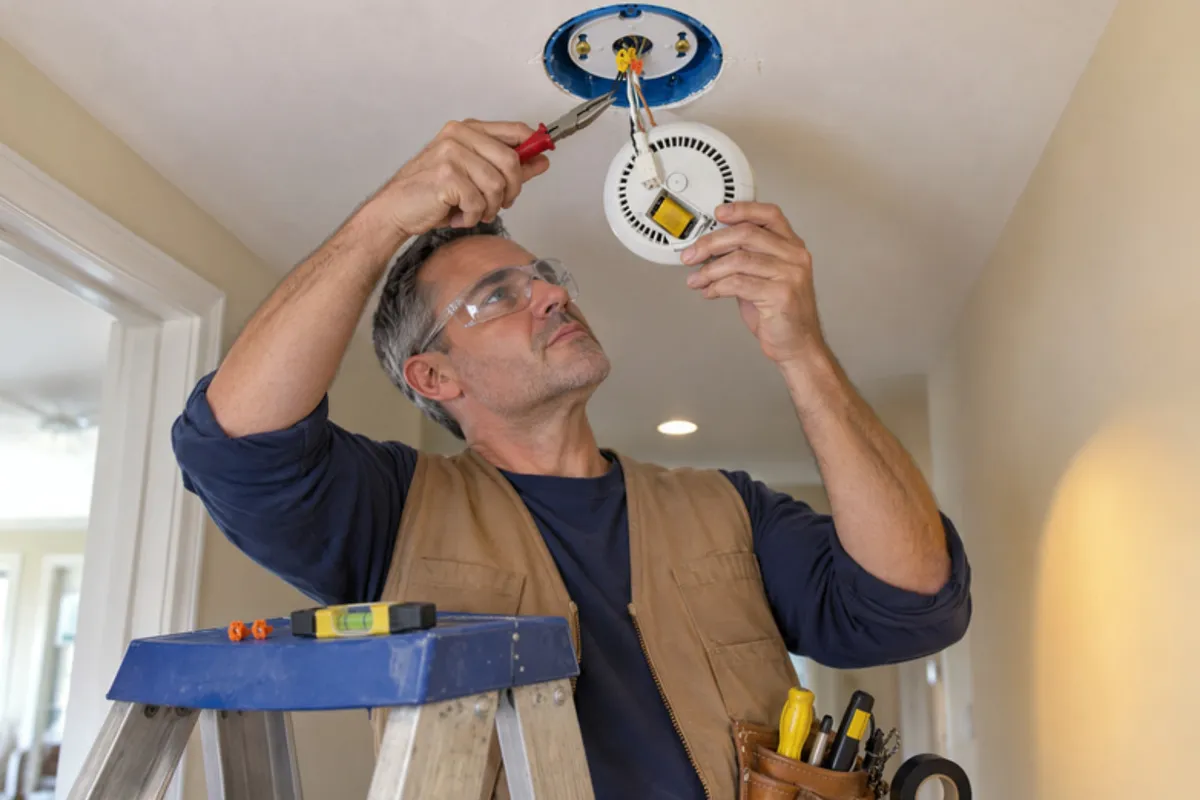
The electrician checks existing alarms, their age and their wiring, then proposes locations and types. After shutting off power, they replace or install units, connect interconnect wires, restore power and test every alarm so that all of them sound together. The whole visit is usually short once the plan is set.
Burning smells with no alarm
If you smell burning from an outlet, switch or panel, leave the house and call 911 first, even if no alarm sounds. Electrical faults can smolder inside walls before smoke reaches a detector. Alarms are one layer of protection, not the only one, and noses count too.
More about Glendale
Calls come in from across Glendale, including around Loop 101, 51st Avenue, Mohawk Drive.
Catlin Court Historic District in Glendale is a National Register neighborhood subdivided in 1914 whose homes are mostly bungalows from that period, so older wiring is likely in the historic core.
Smoke Detector Installation questions in Glendale
Why does my smoke alarm chirp?
Why does my alarm go off when I cook?
Do landlords have to provide smoke alarms?
Do smart alarms work without Wi-Fi?
More electrical services in Glendale
Smoke Detector Installation nearby
Helpful guides
Sources
Last updated: