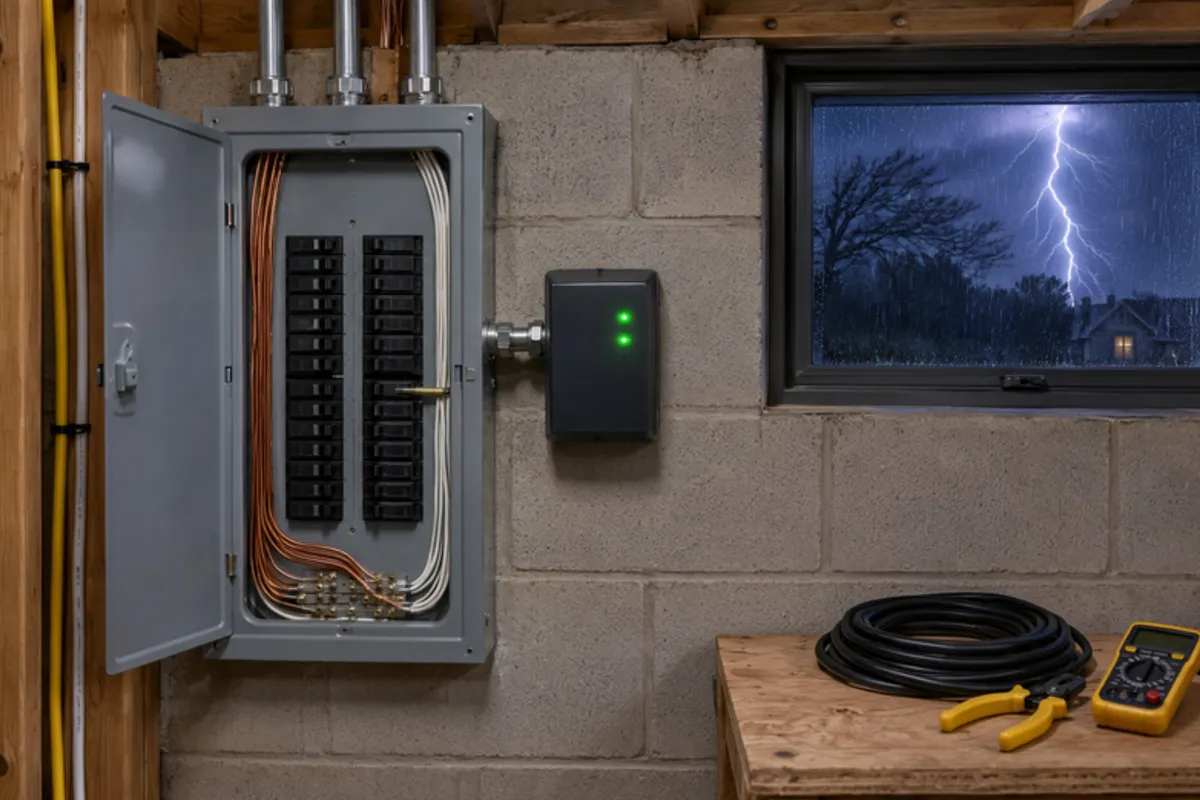
Whole-home surge protection is a device installed at or beside the main panel that diverts voltage spikes before they reach appliances, AC units and electronics. It does not stop a direct lightning strike, but it reduces damage from the smaller spikes that come with storms and utility switching. Call the number on this page to be connected with a local electrician in Gilbert.
Types of protection in plain terms
You will hear about devices at the meter, at the panel and at the outlet. The first two protect the whole house and the third protects individual equipment. Most homeowners choose one panel device plus strips where it counts. The electrician explains which model matches the panel and why it is placed where it is.
AC systems carry the biggest bill
Central AC equipment is the most expensive electronics in most Valley homes, and its control boards and compressors are sensitive to spikes. Replacing a board or compressor during a heat wave is stressful. Protection at the panel, and sometimes at the condenser, is modest next to that risk.
Homes built around 2003 usually have clean grounding and open panel space, so a surge protector is often one of the quicker electrical jobs here.
Whether SRP or APS serves your address, a protector at the panel works the same way, shunting spikes from the incoming line.
Limits of what you pay for
No device makes a house surge-proof. What you buy is a reduction in how many damaging events reach the equipment, plus a clear indicator when the device is spent. Setting that expectation up front avoids disappointment and keeps the purchase in perspective for a home in Gilbert.
What you can ask them to explain
- What the indicator light means and when it signals a problem
- Which circuits are covered
- Whether strips are still worth using
- How the AC condenser is protected
Keep the answers with the house records, so the next owner or the next electrician knows what protects the house.
If something smells burnt
A hot odor from an outlet, power strip or panel is not a surge-protector question. Get everyone out of the house and call 911 first, then ask an electrician to inspect once the scene is safe. Never keep using a strip that is warm, discolored or crackling.
Useful local contacts for Gilbert
Depending on the street, a Gilbert home may be on SRP or APS. SRP lists (602) 236-8888 for outages.
If you see sparks, smoke or flames, or smell something burning from an outlet, switch or panel, get everyone out and call 911 before anything else. For a power line on the ground, stay at least 100 feet away, call 911, then call the utility.
Permitted electrical work in Gilbert is inspected by Gilbert Development Services. The contractor normally applies and schedules the inspection.
The Arizona Registrar of Contractors issues electrical licenses and lets anyone check a contractor's status online. A one-minute lookup before signing is worth it.
Nearby, the same kind of help is available in Chandler, Mesa and Tempe.
Gilbert at a glance
Calls come in from across Gilbert, including around Heritage District, Loop 202 (Santan Freeway), US 60 (Superstition Freeway).
The Heritage District is Gilbert's downtown and original town site, about 0.3 square miles, with a mix of retail, office, education and housing.
Whole-Home Surge Protection questions in Gilbert
Where is a whole-home surge protector installed?
Will a surge protector protect my AC?
Can an old strip still protect my equipment?
Can I install a surge protector myself?
More electrical services in Gilbert
Whole-Home Surge Protection nearby
Helpful guides
Sources
Last updated: