A generator needs a transfer switch or a listed interlock so it never feeds power back into the utility lines, and the work usually needs a permit and inspection. An independent local electrician sizes the unit to the loads you want covered and wires it in. Call the number on this page to be connected with a local electrician in Carefree.
Why a wall outlet is never the answer
Plugging a generator into a household outlet with a double-ended cord feeds electricity backward into the grid, which can seriously hurt a utility worker repairing lines. It can also damage the generator and start a fire. A transfer switch or interlock exists to stop exactly that, and it is the legal and safe route.
Outages happen in every part of the Valley
Older neighborhoods with aging lines, newer subdivisions on new equipment and rural lots at the end of long feeders all see outages for different reasons. Heat can overload transformers, and storms drop lines. So the question is less whether the grid fails than how long you can wait.
Homes of the 1980s often have panels that were never sized for a transfer switch, so the first visit is usually spent on what the panel can accept.
Rural properties often rely on a well pump and sit at the end of a long utility line, which makes backup power more valuable and the load list more specific.
Standby usually costs more than portable
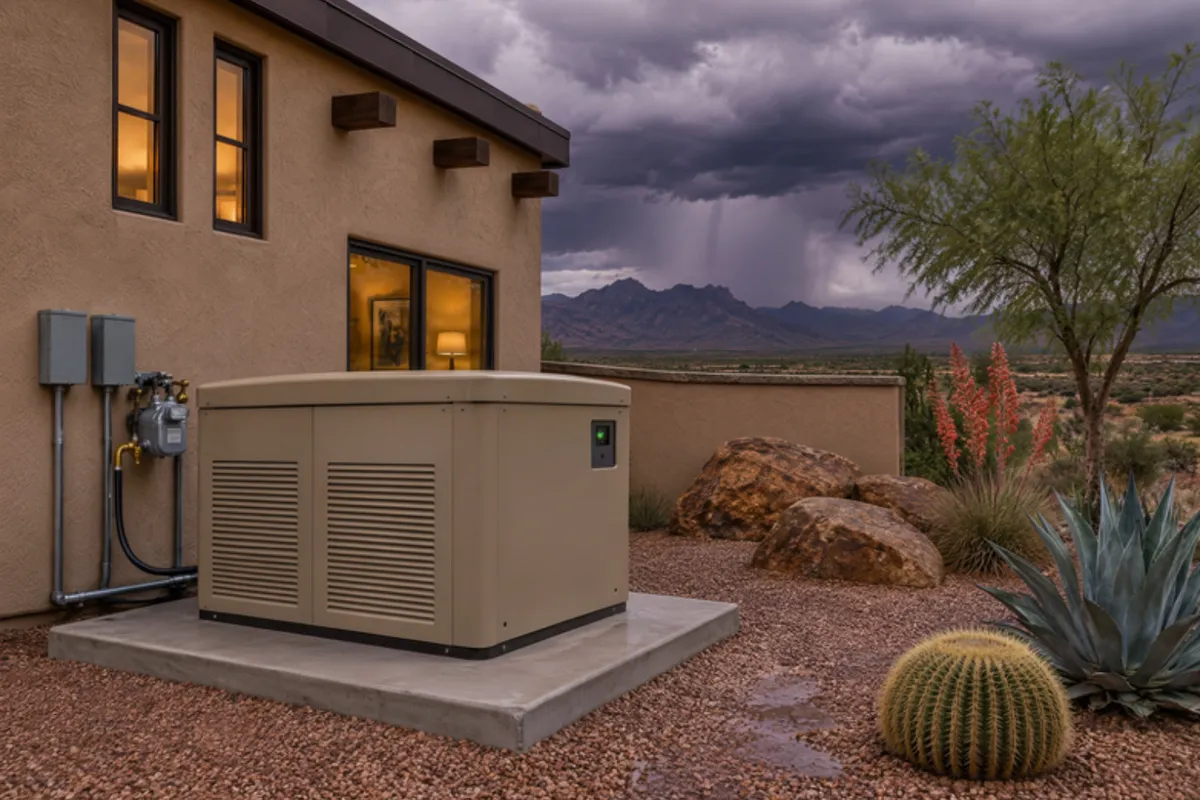
A standby system includes the generator, an automatic transfer switch, a pad, a fuel connection and more conduit. A portable setup mainly needs an inlet and an interlock or manual switch, with the generator purchased separately. Many owners start with a portable setup and move to standby later if the budget allows.
What the electrician should show you
- Where the transfer switch is and how it works
- Which circuits are backed up
- How to start and stop the generator safely
- Where the maintenance schedule is recorded
Ask for it in writing and keep it with the house records, so anyone in the family can run the system.
Keep the unit weatherproofed
Standby enclosures and transfer switches are built for outdoor use, but dust, insects and monsoon rain can still find openings. Check seals and vents once in a while, and keep an inspection record. A weatherproof inlet box on the house wall helps a portable hookup stay safe.
Utility, permits and safety in Carefree
Outages are reported to the utility named on your electric bill (in this part of the Valley that is usually APS or SRP), not to an electrician.
Treat any fallen power line as live. APS and SRP both tell people to stay about 100 feet away and call 911. Inside the house, smoke or a hot burning odor from electrical equipment is also a 911 call, made from outside.
If the job involves a new panel, added circuits or an EV charger, expect a permit and inspection through Carefree Building Department.
The Arizona Registrar of Contractors issues electrical licenses and lets anyone check a contractor's status online. A one-minute lookup before signing is worth it.
Service upgrades need the utility as well as the city or county: the utility disconnects and reconnects power and decides where the meter goes.
Nearby, the same kind of help is available in Scottsdale, Cave Creek and New River.
Generator Installation questions in Carefree
Standby or portable generator: which is better?
Will a generator run my whole house?
Will solar panels keep the lights on in an outage?
Does my home's age affect a generator hookup?
More electrical services in Carefree
Generator Installation nearby
Helpful guides
Sources
Last updated: