Most EV chargers at home run on a 240-volt breaker that serves nothing else, and the job usually needs a permit and inspection. The electrician looks at how much load the house already carries, especially the AC, before sizing the circuit. Call the number on this page to be connected with a local electrician in Paradise Valley.
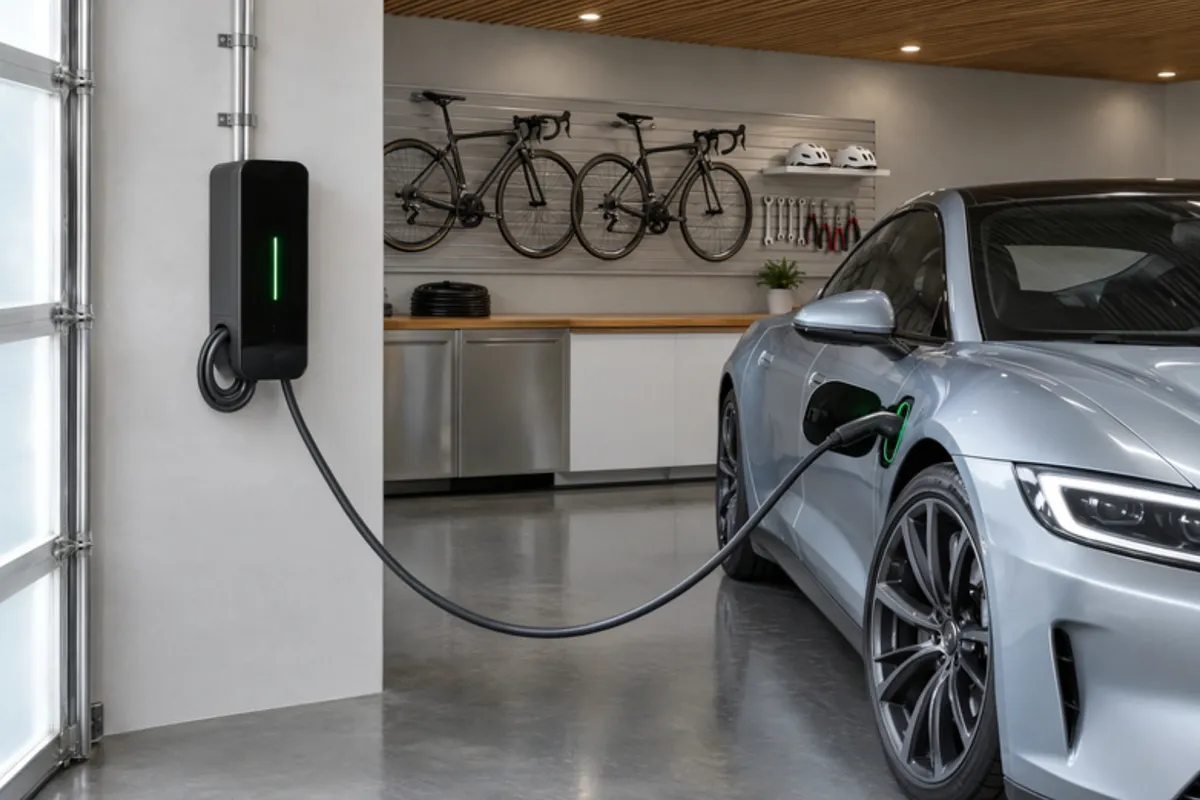
Level 1, Level 2 and what changes at home
For a Paradise Valley household, the cord that comes with most EVs plugs into a regular 120-volt outlet and adds range slowly. Level 2 uses 240 volts, like a dryer or an AC condenser, and refills the battery in a night. That is the setup electricians usually install, and it is why a new circuit is part of the job.
Where Arizona homes differ
Slab-on-grade stucco houses leave little room for hidden wire runs, so routes follow attic spaces, garage walls or surface conduit. Electricians plan the path before pricing it. Longer runs and tougher routing mean more material and labor, which is where many charger jobs gain or lose complexity.
Because the town is split between APS and SRP, the utility named on your bill decides which EV rate plan or program you can use.
Why two charger jobs cost different amounts
A charger three feet from a Paradise Valley panel and one at the far end of a long driveway are very different jobs. Wire, conduit, trenching and labor all scale with distance. The charger itself is often the smaller part of the bill, which surprises people who shop only by unit price.
Questions worth asking the electrician
- What size breaker and wire will you use, and why
- Is the panel able to carry it as it stands
- Who files the permit
- What happens if the inspector flags something
Clear, specific answers to all four are a good sign that the job has been planned properly before any wire is pulled.
Keeping the cable and unit in good shape
Coil the cable off the ground so it is not driven over, and keep the connector clean and dry. Wipe dust from the unit's vents. If the housing cracks or the cable frays, stop using it. Those small habits extend the life of a charger that works hard in Arizona sun.
Utility, permits and safety in Paradise Valley
Depending on the street, a Paradise Valley home may be on APS or SRP. APS lists 602-371-3680 for outages.
Two situations skip the electrician entirely: fire signs (smoke, sparks, a hot or burning odor), which mean leaving and calling 911, and downed lines, which mean staying about 100 feet back and calling 911 and the utility.
Electrical permits and inspections here, so ask whether your job needs one and who will pull it.
The Arizona Registrar of Contractors issues electrical licenses and lets anyone check a contractor's status online. A one-minute lookup before signing is worth it.
Solar, battery and some generator setups need the utility's approval before they are connected. Electricians who do this work handle the application.
Nearby, the same kind of help is available in Scottsdale, Tempe and Mesa.
EV Charger Installation questions in Paradise Valley
Can I plug my EV into a regular outlet?
Can I install a charger outside?
Does the charger brand change the wiring?
Who files the permit for a charger?
More electrical services in Paradise Valley
EV Charger Installation nearby
Helpful guides
Sources
Last updated: