Most Valley homes want a generator to keep the fridge, lights and some cooling running during a summer outage. The electrician adds up those loads and recommends a size, a transfer method and a placement away from doors and windows. Call the number on this page to be connected with a local electrician in Buckeye.
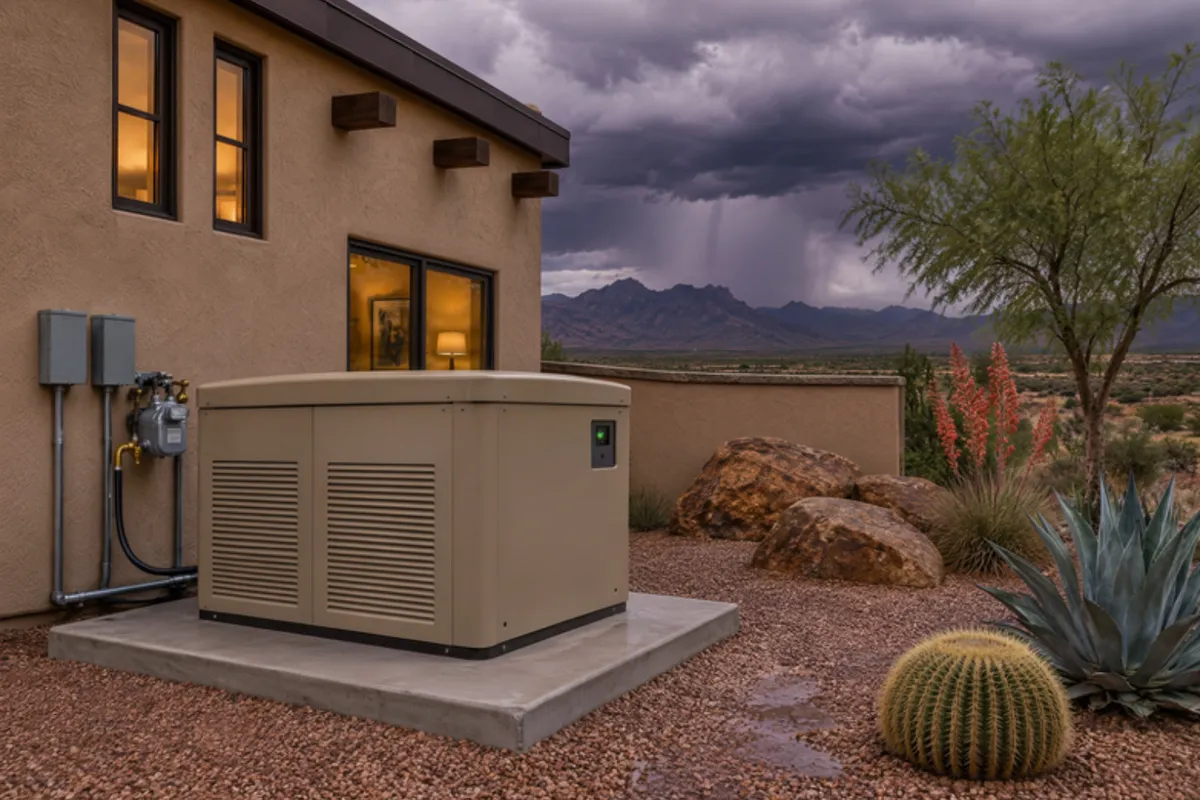
What the electrician actually installs
The visible part is the generator; the electrical work is the transfer switch, new breakers, conduit, the connection between the generator and the panel, and sometimes a gas line coordinated with a plumber. The inspector looks at all of it. Skipping the permit can cause trouble later, especially at resale.
Solar does not mean backup power
Grid-tied rooftop solar shuts off during an outage for lineworker safety, so panels alone will not keep the house running. Some systems add a battery for backup; others pair with a generator. If you have solar, tell the electrician so the transfer arrangement does not clash with the inverter.
With a median build year of 2010, most homes here have 200-amp panels with room to spare, though a large AC and pool equipment still shape the generator size.
Size is a cost lever
A generator that covers only essential circuits costs less to buy and wire than one that covers the whole house. Trimming the load list, adding a soft-start for the AC, and leaving out the pool pump are common ways owners rein in the project. The electrician can show how each choice changes the quote.
Before electrical work starts in Buckeye
Check the electric bill to see which utility serves the property; around the Valley it is most often APS or SRP. Outage reports go to that utility, which posts its numbers online.
Call 911 first for smoke, flames or a burning smell from wiring, and do it from outside. Report a line on the ground to 911 and the utility, and keep roughly 100 feet away from it.
If the job involves a new panel, added circuits or an EV charger, expect a permit and inspection through Buckeye Building Safety.
In Arizona, electrical contractors need a license from the Registrar of Contractors (ROC). Residential electrical work falls under the R-11 class, and the ROC's online contractor search shows whether a license is active.
Service upgrades need the utility as well as the city or county: the utility disconnects and reconnects power and decides where the meter goes.
Calls from Buckeye are often matched with electricians who also cover Goodyear, Waddell and Litchfield Park.
Standby units need regular exercise
Automatic standby generators run themselves briefly on a schedule, and they need periodic maintenance such as oil and filter changes, a battery check and a look at the transfer switch. Ask the installer who handles service, since a generator that has not been run for years is the one that fails in a storm.
Backfeed puts lineworkers at risk
A generator that feeds power into a home's wiring without an isolating switch energizes the lines outside, endangering crews working to restore service. This is why portable generators must never be plugged into a wall outlet. A transfer switch or an interlock is the correct connection, and it protects you and your neighbors.
Generator Installation questions in Buckeye
Can I plug a portable generator into a wall outlet?
Will a generator run my whole house?
How do I avoid carbon monoxide problems?
Can I install the transfer switch myself?
More electrical services in Buckeye
Generator Installation nearby
Helpful guides
Sources
Last updated: